
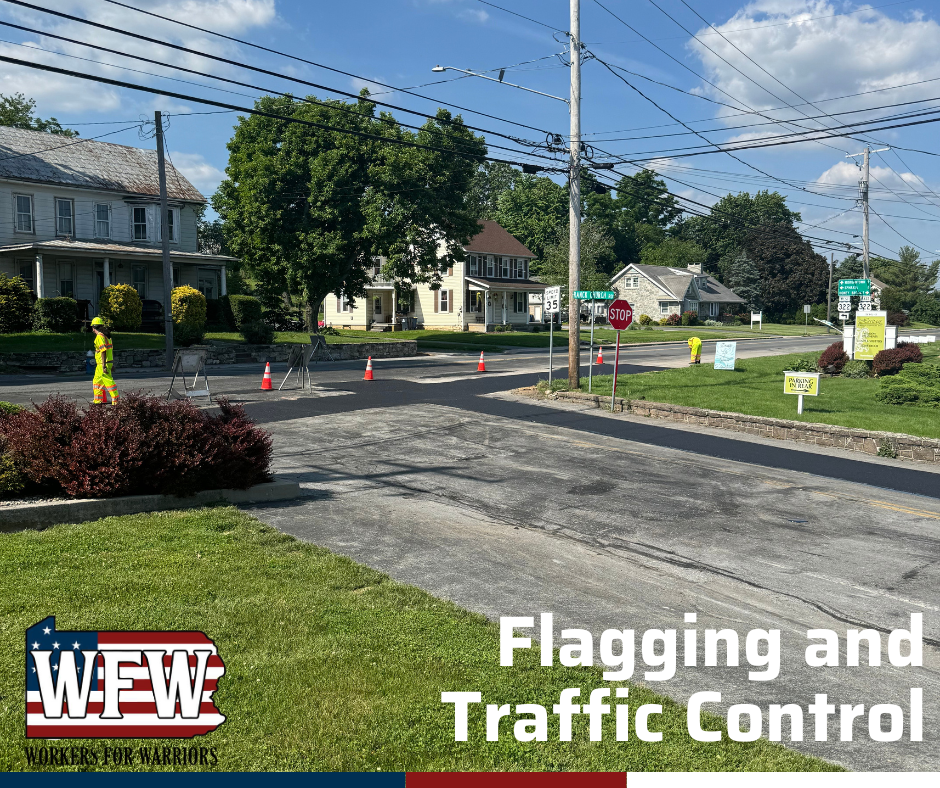
The Importance of Flagging and Traffic Control
Flagging and traffic control is the management of traffic in and around construction sites and work zones. It is critical for the safety and protection of both construction workers and drivers to follow the direction of the traffic control flaggers in all work areas. Flagging and traffic control involves traffic signage, barricades, traffic cones, and other reflective equipment to assist in safely managing traffic congestion throughout Pennsylvania’s roads. Contact WFW today to schedule your traffic flagging needs in PA.
Expectations of a Traffic Control Flagger
Traffic control flaggers’ priority is to maintain safety on the roads as they direct and control traffic around construction sites. Flaggers are to manage traffic during the progression of road work construction and maintain the flow of traffic safely through work zones. Traffic control flaggers’ duties include guiding drivers safely through detours, traffic movement, and pattern changes.
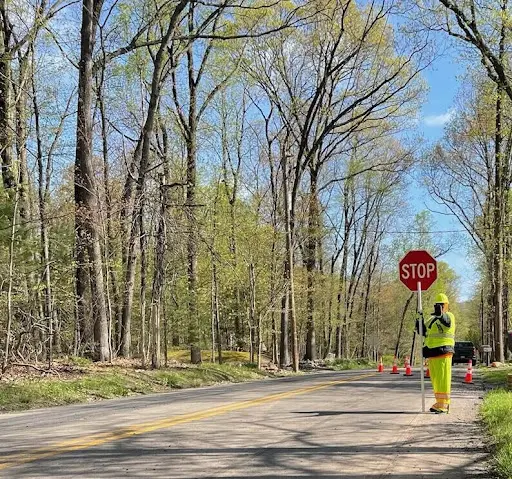
Another primary responsibility of flagging and traffic control is to consistently communicate with construction workers and other on-site flaggers. If a new traffic pattern is required for the construction site, flaggers must be alert and ready to direct traffic accordingly. While traffic control flaggers keep the flow of traffic under control, they may be required to assist construction crews with various tasks pertaining to the roads, such as removing debris or other obstacles that could impede traffic flow. In the case of drivers who fail to follow or obey the temporary traffic safety measures, flaggers are to report this information to the authorities.
Traffic Control Flagger Skills
While maintaining the safety of both workers and motorists, flagging and traffic control require a certain level of traffic control training and skills to perform their duties. PennDOT certifications are required for anyone to be a flagger and since they are at the forefront of the public, professionalism must be consistently maintained. On-site traffic control flaggers must be able to exercise a variety of skills including:
- Work as a member of a team
- Communication skills
- Observational and record keeping skills
- Knowledge of the state of Pennsylvania’s traffic regulations
- Ability to stand for long periods of time and through all weather conditions
Flaggers must be able to also be capable of setting up appropriate traffic control signage and barriers while creating alerts and potential escape routes in the event of an emergency.
Workers For Warriors provides flagging and traffic control services as well as rental equipment for traffic control that is available for your next project.
Safety Points of Traffic Control Training
Traffic control is a critical element on construction sites, emergency situations, and community events. Traffic control flaggers ensure the safety of workers and drivers by maintaining a flow of traffic through and around the work zone. Enforcing speed and red lights is essential in creating a safe environment for everyone. Flaggers are also trained and responsible for providing driver assistance, accident detection, and safety response.
While safety is the priority, learning how to maintain efficiency in the traffic flow is another key takeaway of traffic control training. Creating effective traffic flow patterns minimizes congestion and disruptions to the work zone. Altering traffic routes often raises safety and congestion issues. Implementing an effective traffic plan is critical to establishing a safe and efficient traffic flow.
No one takes safety more seriously than Workers For Warriors. We provide comprehensive training for traffic control flaggers, no prior experience is necessary. Explore our job openings for Veterans in Pennsylvania and join us in ensuring safety on the roads.
Benefits of Hiring Flagging and Traffic Control Support in Pennsylvania
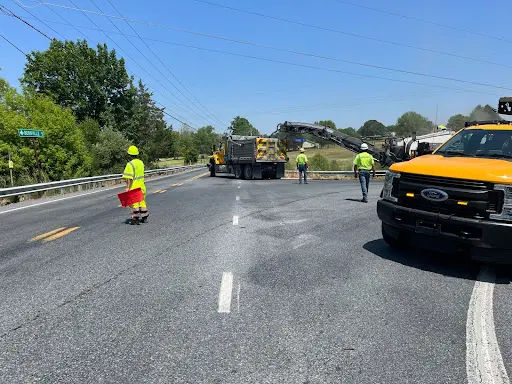
Utilizing traffic control flaggers in Pennsylvania allows motorists to safely navigate the work zone. By law, Publication 213, the state of Pennsylvania requires all flaggers to be trained and pass the state-mandated exam. Pennsylvania requires stringent adherence to safety. Flaggers are required to wear hard hats and ANSI Class 2 and Class 3 vests and garments and equipment that meet specified sizing and visibility guidelines as well.
Workers For Warriors’ traffic control flaggers can provide a vast scope of benefits such as:
- Expertise in risk management and PennDOT’s traffic laws to reduce liability
- Cost-effective
- Improves efficiency in project management
- Greater flexibility and scalability
- Provides quality control process by meeting Pennsylvania’s state regulations and industry standards.
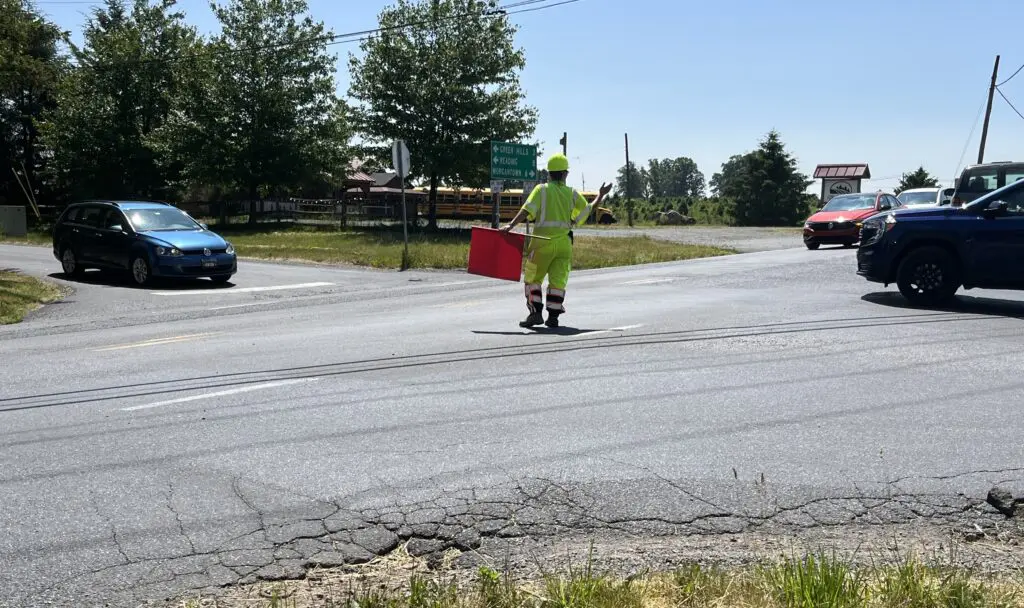
Outsourcing traffic control flaggers can provide you with efficient and effective methods of maintaining the safe flow of traffic through work zones or emergencies across Pennsylvania.
Workers For Warriors Licensed and Insured Veteran Flaggers
Workers For Warriors is a full-service traffic control flagger team of Veterans. Our Veterans go through traffic control training and are certified through PennDOT Publication 408, Section 901.3 Flagger Training. Workers For Warrior’s flaggers are fully insured and ready to take on your next traffic control project.
No one is more passionate or better trained to maintain the safety of others than a U.S. Veteran. Workers For Warriors put the finest individuals who have served our country at the front of your traffic control solution. Contact Workers For Warriors today to hire the best traffic control flaggers to manage your work zone traffic on these Pennsylvania roads.
Workers For Warriors has open job opportunities for Veterans in Pennsylvania. No prior experience is necessary and training will be provided. Contact us today to become a traffic control flagger with WFW.